











Supply chain management system
How Rensai Labs automated finance, procurement, and multi-branch logistics in one SCM platform – integrated with SAP ERP and a corporate tendering service.

Margins under pressure? Delays at borders, shifting transport regulations, or disconnected systems slowing logistics down?
Rensai Labs helps shippers build custom TMS, WMS, and AI solutions that optimize routing, automate U.S.-Mexico customs workflows (ACE and Carta Porte 3.1), and modernize logistics operations without replacing the systems you rely on today.
Delayed shipments, rising transportation costs, and frustrated dispatchers rarely happen by accident. They usually point to one or more of these four operational problems.
Can your dispatchers see the real-time status of every shipment? If not, your team is always one step behind. Disconnected systems hide problems until customers discover them first, leading to:
A constant stream of "Where's My Shipment?" calls and status requests.
No visibility into port congestion, weather disruptions, or interstate traffic until it's too late to respond.
If any of these challenges sound familiar, the problem may not be your operation. It may be the software running it.
Is your software becoming more expensive every year?
An affordable SaaS platform can quickly become one of your fastest-growing operating expenses:
Custom software development for logistics breaks that cycle. Standard software wasn’t built for the complexity of U.S. logistics. Custom logistics software was.

If a SaaS platform covers 80% of your business needs, we’ll tell you. But when your competitive advantage depends on unique workflows, legacy ERP integrations, or custom pricing models, standard solutions from logistics software companies can no longer support your business. That’s when a hybrid architecture built around your business — not someone else’s product — gives you capabilities SaaS never will.
Most custom platforms pay for themselves within 18-24 months and become an intellectual asset your company fully owns.
We combine Mapbox, Google Maps, and other proven APIs with custom code. We use off-the-shelf technology where it makes sense and add proprietary capabilities only where they reduce last-mile costs and differentiate your business.






Can you automate up to 90% of routine logistics operations? Yes — with the right processes in place.
As a logistics software development company, we start by analyzing your workflows to identify bottlenecks and fix what slows your business down. First, we optimize your processes. Only then do we introduce Generative AI, LLMs, machine learning, and AI agents — so automation strengthens proven workflows instead of multiplying existing problems.
While AI increases upfront development costs by 15-35%, most of our clients reach ROI within the first year. Every year after that, the savings go straight to the bottom line.

AI agents analyze contracts. They read broker emails, extract data from scanned documents (including handwritten or damaged paperwork) and update your TMS automatically. They send email notifications, negotiate carrier rates, and place natural-sounding calls to warehouses to confirm dock appointments.

Detect damaged shipments before they leave the dock. Computer vision automatically inspects cargo, identifies packaging damage, and instantly verifies Proof of Delivery (POD) documents. Built-in NLP assistants resolve shipment status requests in natural language, keeping routine inquiries away from your operations team.

Your competitive advantage isn’t AI alone. It’s a team that knows how to use it. We combine logistics software with LLM-powered assistants that help operations teams, dispatchers, and account managers automate routine work without writing a single line of code. The result is up to 10× higher individual productivity across your organization.

Building your business case before coding
We find waste (unbilled detention, empty miles), check FMCSA, DOT, and cross-border compliance.

Architecting your freight ecosystem
We architect the freight ecosystem: event-driven logic, Zero-Trust security, dispatch-ready UX, offline in-cab workflows, and integrations with legacy ERP, WMS, and carrier systems.
Roadmapping for 100% business continuity
We map phased delivery, sequence EDI/API data flows, benchmark KPIs, and forecast freight margins.

Validating before dispatch goes live
We validate load, security, compliance, and hardware readiness: VAPT, HOS and ACE eManifest checks, IoT cold-chain, and warehouse integrations.

Deploying without disrupting live operations
We keep the platform sharp: performance monitoring, fast incident resolution, AI model tuning with live routing data, and proactive security and compliance updates.

Optimizing peak performance post-launch
We keep the platform sharp: performance monitoring, fast incident resolution, AI model tuning with live routing data, and proactive security and compliance updates.
* Every project includes 90 days of post-launch support.
We develop software for every segment of the U.S. logistics industry, from auto parts distribution to port operations.

Reduce LTL shipping costs by 10-50% and protect your margins from costly returns.
Our LTL pooling (Pool Distribution) algorithms bypass expensive hub-and-spoke networks, reduce freight handling to as few as two touchpoints, and minimize product damage.
Rensai Labs develops custom eCommerce and Order Management Systems (OMS) for reverse logistics. Intelligent algorithms classify every return and route it to resale, refurbishment, or disposal. Your team gains a standardized workflow with no spreadsheets, no manual decisions, and no processing bottlenecks.
Your project will be delivered by 35+ in-house engineers who combine deep logistics expertise with enterprise software engineering. They understand Through-Trailer and Transloading just as well as they understand microservices and monolithic architectures.
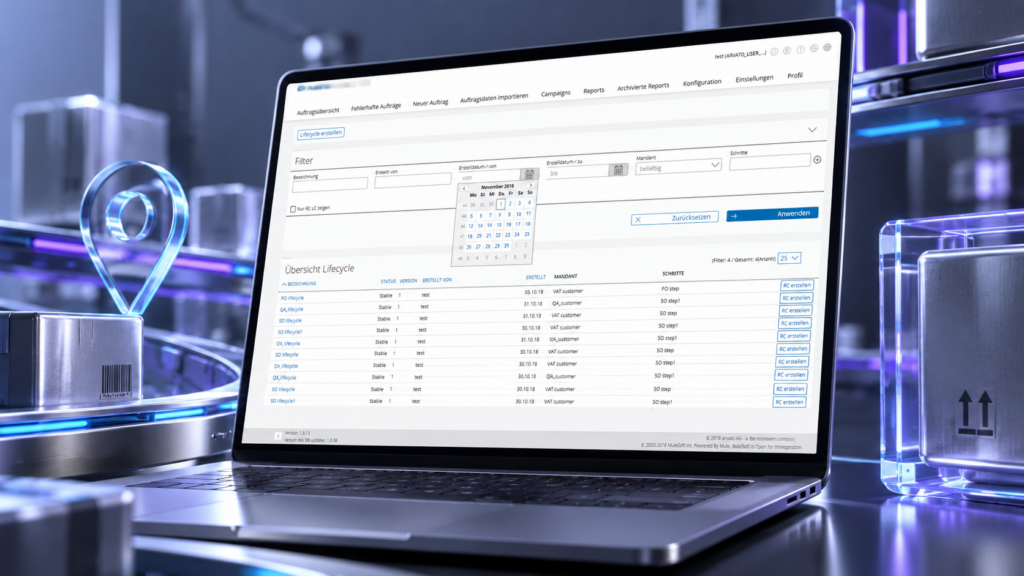
How Rensai Labs automated finance, procurement, and multi-branch logistics in one SCM platform – integrated with SAP ERP and a corporate tendering service.
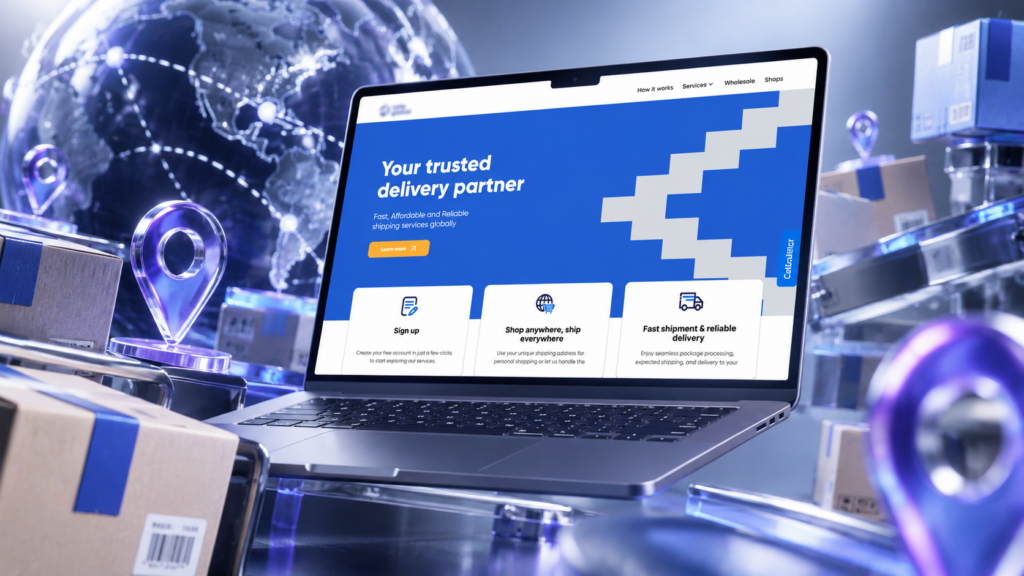
How Rensai Labs turned complex cross-border logistics into a simple customer journey – a cross-platform PWA with personal virtual addresses and real-time parcel tracking.
Which software trends in the energy and utilities industry are already taking hold and will continue to define the market over the next five years? If you work in the energy sector, you likely know the broader trends well. This article looks at the landscape specifically from a software perspective: what IT capabilities you can […]
Net-zero goals have moved far beyond romantic environmental ideas. Today, software developers face an engineering challenge at epic scale. For decades, decarbonization was treated as the job of energy companies building solar farms and wind farms. But the economics have changed: according to the International Renewable Energy Agency, solar PV module prices have fallen by […]
How to win the modern customer battleground? In this article, Rensai Labs explores the key digital customer experience (DCX) trends. We break down what they are, what technologies are required, how they drive business metrics, and what you need to consider to not just follow the current, but truly transform your customer experience.
The cost of custom logistics software depends on the scope of integrations with your ERP systems, carrier and partner integrations (EDI/API), and the level of compliance you require, including FMCSA, HIPAA, and SOC 2.
Based on our experience, here are the typical budget ranges for a hybrid development team that delivers U.S.-level quality without the cost of a fully U.S.-based team:
* Important: We calculate your Total Cost of Ownership (TCO) upfront, factoring in annual maintenance and cloud scaling costs of approximately 15–20%, so there are no surprises after launch.
At Rensai Labs, we understand that even the best-laid plans can change as the logistics market evolves.
Based on our experience, here are the typical budget ranges for a hybrid development team that delivers U.S.-level quality without the cost of a fully U.S.-based team:
What if your business can’t wait 18 months? We use a phased approach to deliver the highest-value capabilities first, well before the full platform is complete. This approach lets us tailor development to your timeline and identify opportunities to accelerate progress while protecting the business-critical functionality your operations depend on.
Ask dispatchers about the biggest pain points in their daily work, and the product roadmap will write itself. It won’t be filled with generic features. Instead, it’ll focus on the capabilities that truly matter. Those are the features worth building first.
Dispatchers often complain that they have to call drivers manually because the mobile app doesn’t work in rural areas. That’s your real requirements document. Start with offline functionality and SMS fallback. A better-looking interface can wait.
At Rensai Labs, we build logistics software that:
Yes. We develop a full range of custom TMS and WMS solutions built for the realities of the United States logistics market. To us, market-specific requirements mean native ELD integration for FMCSA compliance and Hours of Service (HOS) tracking, geofencing for automated detention billing, and seamless data exchange with U.S. Customs through ACE eManifest.
Our teams modernize existing systems without throwing away the investment already inside them. Custom API gateways connect legacy platforms like SAP and Oracle with IoT telematics and mobile apps, keeping the old core useful while new capabilities go live.
Clients often come to RenSai Labs for targeted integration of the modules with the highest revenue impact. In logistics, that usually means dynamic LTL pooling and automated detention calculation by geofence first.
Yes. We develop a full spectrum of custom TMS and WMS solutions built for the realities of the United States market. To us, market-specific requirements mean native ELD integration for FMCSA compliance and Hours of Service (HOS) tracking, geofencing for automated detention billing, and seamless data exchange with U.S. Customs through ACE eManifest.
Yes, absolutely. As part of our logistics software development services, Rensai Labs integrates AI into the platforms that run your operations: generative AI for document processing, predictive AI for failure prevention, and AI agents for booking automation.
Our engineers specialize in:
We use the Pragmatic AI framework to reduce risk at every stage. Every engagement starts with a data audit, moves to a local pilot in 4-6 weeks, measures business results, and scales only after the business case justifies the investment.
Integrate Artificial Intelligence, the Internet of Things, and Machine Learning into your logistics software, and you’ll quickly see the difference. Eliminating operational bottlenecks, reducing costs, and delivering better service are just the first results.
Companies typically see operational costs drop by up to 30% within 12 months, On-Time In-Full performance improved to 95%+, and failed deliveries fall from 8% to 3.1%.
Whether your logistics management software comes from Rensai Labs or another vendor, we support both through our Basic and Advanced Support Packages.
With the Basic Support Package, our team keeps your system running reliably month after month. You’ll receive 8 to 32 support hours per month and scheduled maintenance, typically twice a month.
With the Advanced Support Package, our engineers become an extension of your team. Choose a fixed monthly budget or access to Rensai Labs specialists during business hours, with billing based on actual time spent. We enhance performance, build new features, provide technical expertise, and resolve production issues outside warranty coverage.
Rensai Labs uses military-grade encryption and SSL protocols to secure every transfer of sensitive data. Our solutions also include:
If your business handles highly sensitive data (for example, pharmaceutical supply chains), custom logistics software development is the only practical choice. You control every layer of your Zero Trust architecture, continuously verify every access request, and enforce least-privilege access by design, not as an optional feature.
SaaS is easy to adopt, though expensive to maintain as your team grows. Every additional user increases subscription costs, and annual SaaS spending in the United States can easily reach $30,000 to $200,000 or more.
That’s why many companies invest in custom software development for logistics instead of paying for additional SaaS licenses. You own the platform, customize it around your operation, and eliminate per-user licensing fees.
Need AI agents, geofencing, computer vision, or new functionality? Custom logistics software development gives you the freedom to add it.
Fill the form to request a quote: