High Maintenance Costs, Mounting Technical Debt

A deep application portfolio audit
We move legacy systems to the cloud and rebuild the architecture around them, so ongoing operating and infrastructure costs can drop by 30-50%.
Is technical debt building up inside your current software? RenSai Labs inspects the code, infrastructure, and processes behind it, then maps a phased modernization plan.
In 80% of cases, the smarter move is not a ground-up rebuild. We improve the system you already have.
What’s the cost of inaction?
U.S. enterprises spend more than $1.14 trillion every year just keeping the lights on for legacy IT systems. The longer you wait to break free, the bigger the future bill gets: every extra year can add up to 20% to modernization costs. Meanwhile, your competitors are taking your customers.
The damage compounds:
A deep application portfolio audit
We move legacy systems to the cloud and rebuild the architecture around them, so ongoing operating and infrastructure costs can drop by 30-50%.
Is your platform still running on hardware no vendor supports? That turns it into an easy target for cyberattacks. And it makes compliance with modern regulatory requirements, from GDPR and HIPAA to PCI DSS, nearly impossible.
DevSecOps and Zero Trust architecture
Security gets built into the system from the start, data protection is enforced at every layer, and compliance controls become automated.
Does your old code get harder to keep alive every year? The specialists who still understand legacy languages like COBOL are retiring at scale. And with them goes the undocumented business logic your core systems still depend on.
Generative AI-powered modernization
We analyze and document legacy code automatically, recover the business logic trapped inside it, and move applications to modern languages like Java and .NET Core, plus open standards.
Was your legacy system built before open APIs and cloud became the operating standard? Fragmented data, missing real-time interfaces, and monolithic database schemas make tomorrow’s tools almost impossible to integrate.
API-first architecture
It cuts through data silos and gives your business the technical foundation to plug in what comes next, from predictive analytics to generative AI.
Afraid one change could break the whole system? Regression testing holding every release hostage? In tightly coupled monoliths, every component pulls on the next, stretching release cycles for months.
Break the monolith apart
We split heavy applications into independent microservices, containerize them with Kubernetes, and connect delivery to CI/CD pipelines. Teams can ship new features in isolation, multiple times a day. Time-to-market stops dragging and starts moving.
Worried about disrupting business continuity? You should be. Full “big-bang” replacements of complex systems carry massive risk: up to 79% of those projects fail or run over budget
The Strangler Fig pattern
We do not rip out the old system in one dangerous move. We migrate functionality module by module, keep the legacy platform running in parallel, and switch over only when the new system has proven it can carry the load.
Across RenSai Labs’ primary U.S. markets, including Texas, Pennsylvania, Illinois, Georgia, Florida, and North Carolina, mid‑sized and large companies usually outgrow their internal software first. Rigid Excel workflows, Access databases, and overextended ERP systems mean one thing: modernize.
Clients need outdated tools replaced, approvals, and documents automated, real‑time dashboards built, and disconnected systems integrated across SAP, Salesforce, HRIS platforms, internal ERPs, and industry‑specific software. The best application modernization services start with those operational realities, not with AI for its own sake.
Outdated systems bleed capital across the technology landscape: code, cloud spend, architecture, UX, data, and delivery pipelines. RenSai Labs attacks each failure point with focused application modernization services:
We use the 7 Rs framework to decide what to rehost, replatform, refactor, retain, retire, relocate, or replace, then run your legacy and new platforms concurrently for at least two full business cycles. Transactions are verified automatically before final decommissioning. The original software stays alive for as long as needed. We control both systems until the switch is truly safe.
Cloud‑native gives businesses freedom to integrate AI, scale without friction, and move faster. RenSai Labs gets you there without the lazy lift‑and‑shift move. Your application transitions to fully managed PaaS architecture, absorbs peak demand across AWS, Azure, and Google Cloud, and keeps local data where control requires it.
Tightly coupled legacy systems turn teams into traffic jams. We split them into independent microservices with domain‑driven design. Fragile synchronous dependencies become asynchronous, event‑driven architecture – fewer chain reactions, stronger resilience. Business logic stays protected, and up to 42% of lost engineering capacity comes back into play.
Our team rebuilds outdated desktop platforms into high‑performance mobile web applications optimized for Google Core Web Vitals, with LCP under 2.5 seconds. Up to 30% of organic traffic lost to poor Lighthouse scores is recovered. Bulky jQuery code and aging frameworks become React components, returning up to 50% of frontend time lost to legacy UI upkeep.
Redundant ETL pipelines are cut in half. Infrastructure costs drop by 30-50%. RenSai Labs anchors your data modernization strategy in a high‑performance cloud lakehouse. Scattered databases get unified, data quality barriers get cleared, and vector search is built in so generative AI can scale on data it can actually use.

We build self‑healing systems engineered for up to 99.95% availability under SLA. IaC scripts become stable, secure, and fully versioned, so configuration drift gets cut off early and hidden failures surface before they spread. One dashboard brings metrics, logs, and traces together, giving your team a 40% faster path from signal to fix.
Ready to take legacy app modernization into new territory? Turn your cloud into a high-performance engine for live AI and generate measurable financial lift faster.
Putting intelligence on top of brittle legacy processes is a bad bet. That is why RenSai Labs first brings your IT infrastructure to peak efficiency, then helps you define the right scale for your AI projects.
The audit uncovers where AI can work hardest. We assess your information layer, build a realistic implementation plan, and prepare the environment so autonomous agents can safely act on business-critical knowledge and operate at production scale.
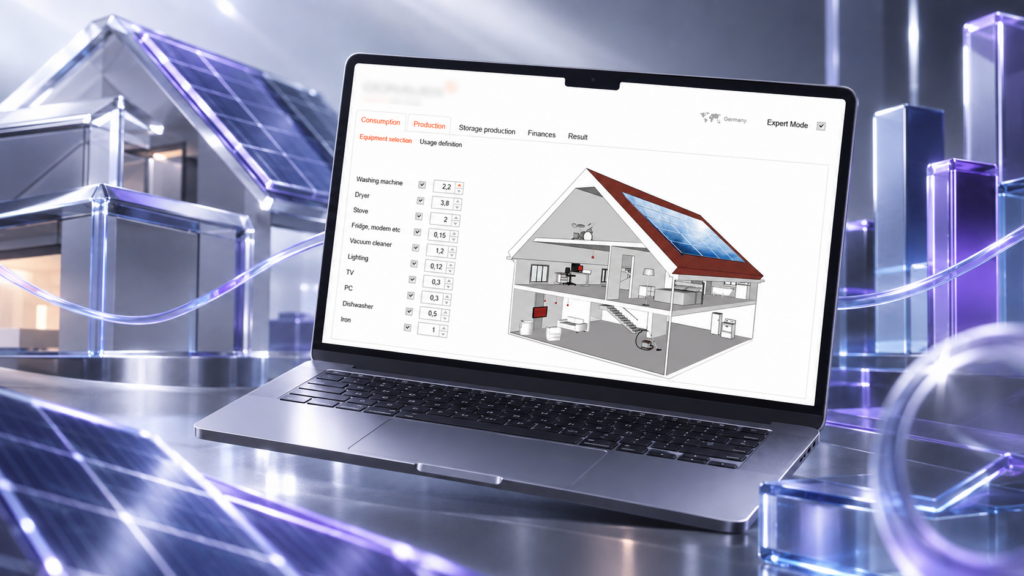
An interactive 3D web application for precision solar panel layout planning, energy forecasting, and automated proposal generation.
How Rensai Labs built a CAD platform for 3D modeling of distribution and control equipment, with rule-based validation and automated documentation.
Answer a few questions about your codebase, team, and budget to see what maintaining legacy software is really costing you every year.
Here is what staying on your current stack is likely costing you every year it goes unaddressed.
Developer Productivity Tax
Tech-debt-heavy codebases can drain up to 42% of developer capacity on maintenance, workarounds, and manual regression checks. You are paying engineers to fight the software instead of shipping new business value.
Compounding Cost of Delay
Legacy complexity has an interest rate. Left alone, spaghetti dependencies can grow 20% annually, turning a $1.2M modernization project today into $1.728M in just two years.
Security & Breach Risk Premium
+$1,760,000
In average breach exposure
Unsupported frameworks turn legacy systems into cyber targets. AngularJS alone carries 35+ unpatched CVEs. Without native logging, zero-trust controls, and rapid patching, breaches on legacy infrastructure can cost $1.76M more than on modernized cloud-native systems.
Unplanned Downtime Exposure
$300,000-$1,000,000
Per hour of outage
Tightly coupled architectures lack redundant, automated failovers. Over 90% of mid-size and large enterprises report that a single hour of unplanned downtime on core legacy applications exceeds $300,000.
Let's turn these numbers into a concrete modernization roadmap scoped to your stack, team, and budget.
*These figures are illustrative estimates based on common industry benchmarks and the inputs you provided.

We use API-first encapsulation to connect legacy databases to the cloud. AI automation and specialized refactoring tools can compress project delivery timelines by up to 4-4.5x. You get an adaptive ecosystem that lets your logistics business plan and track road, air, and ocean supply chains with next-generation visibility and control.
With RenSai Labs, the real difference in application modernization vs migration is economics: less time, less risk, and less residual debt.
RenSai Labs
Manual Migration
Which software trends in the energy and utilities industry are already taking hold and will continue to define the market over the next five years? If you work in the energy sector, you likely know the broader trends well. This article looks at the landscape specifically from a software perspective: what IT capabilities you can […]
Net-zero goals have moved far beyond romantic environmental ideas. Today, software developers face an engineering challenge at epic scale. For decades, decarbonization was treated as the job of energy companies building solar farms and wind farms. But the economics have changed: according to the International Renewable Energy Agency, solar PV module prices have fallen by […]
How to win the modern customer battleground? In this article, Rensai Labs explores the key digital customer experience (DCX) trends. We break down what they are, what technologies are required, how they drive business metrics, and what you need to consider to not just follow the current, but truly transform your customer experience.
RenSai Labs proves its depth through the Integration Architecture Test. Before you sign anything, we skip the generic sales decks and open the hood on comparable application modernization solutions we’ve actually shipped. Your CTO see s the exact architecture diagrams, including how our team connected modern cloud applications to 20-year‑old on‑premise ERPs and fragmented third‑party APIs with no planned downtime.
Real engineering depth means building resilient systems that survive the complex reality of U.S. corporate operations. If we can’t show you a clean, battle‑tested integration design that solves a problem like yours, you shouldn’t hire us.
Through production telemetry. RenSai Labs measures success against core DORA metrics and business cost indicators, including:
Not project complexity alone. The cost to modernize legacy applications can range from $25,000 to $100,000 for basic replatforming. Full‑scale refactoring into cloud‑native microservices can climb from $500,000 to $1 million and beyond. But the biggest cost multiplier is deferred technical debt – and you can quantify its impact now.
Use the RenSai Labs calculator to see what waiting is already taking from your budget.
Without seeing your business requirements and technical landscape, we can only give the honest range: anywhere from 4-8 weeks to 12-18 months. Either way, RenSai Labs treats your application modernization timeline as a top priority. With proprietary AI‑powered modernization tools and 45+ specialized engineers, we cut development and testing cycles so your timeline stays realistic, not risky.
In the modern enterprise, digital transformation sets the bar for business automation. Think end‑to‑end multi‑agent AI systems.
App modernization does the harder engineering work underneath. It rebuilds legacy architecture around cloud‑native standards: API‑first design, event‑driven communication, microservices, and real‑time CDC, while optimizing the system for AWS deployment.
Every AI initiative eventually runs into a hard ceiling because probabilistic AI agents cannot reliably operate on siloed databases, 1990s‑style batch processing, and tightly coupled code. That is why modernization is usually the answer.
Fill the form to request a quote: