






Energy Software Development
We design and deploy data-driven platforms that fuse EMS, SCADA, smart metering, and DER management into one unified ecosystem. Whether it’s modernizing legacy infrastructure or building custom AI for load forecasting and outage response — we deliver software built for International regulatory standards and real-world scale.
8-12
Years of Engineering Expertise
19+
Energy System Development Projects
38+
In-House Energy Software Developers
90%
of Middle & Senior Specialists
Common challenges in the energy sector

Legacy utility software hides massive costs. Driven by escalating technical debt, annual maintenance rises 15-20% each year, creating an unsustainable bottleneck that stalls digital transformation.
Energy Software Development Services
Full-cycle Custom Energy Software Development
We design and build custom energy platforms tailored to your exact workflows. Guiding your project from initial Concept Discovery to post-launch Maintenance, we manage every technical layer of web and mobile engineering to deliver high-performance solutions aligned with your business goals.
Energy Project & Resource Planning Management Software Development
The Rensai Labs team builds custom management platforms for complex energy projects. By automating resource allocation, tracking procurement, and connecting field and office operations, we help energy companies prevent delays, control budgets, and maintain strict regulatory compliance from planning through delivery.
Legacy Energy Software Modernization
Our team helps companies stop burning budgets on servicing technical debt. We modernize your legacy utility software, automate workflows, digitize energy operations, and secure your critical infrastructure so you can roll out new digital tools whenever the market demands.
AI and Digital Transformation
Rensai Labs accelerates your digital transformation by embedding intelligent technologies deep into energy operations. Leveraging AI, Digital Twins, IoT, and Cloud architecture, we help utilities automate operational control, forecast energy demands, and prevent downtime before it impacts your grid.
Energy Software Integration Services
Integrating new software into your grid shouldn’t feel like a gamble. At Rensai Labs, we wrap technical audits, consulting, and gateway development into a single, secure process. We dive into your current IT architecture, catch vulnerabilities in existing software, and build reliable APIs that connect your systems without putting your infrastructure’s stability.
MVP Development
Collaborating with you, the Rensai Labs Team prioritizes 1-2 core features that solve your problem and discard everything else. By developing a focused Minimum Viable Product (MVP), we test your main hypothesis and basic features in a secure sandbox, catching hidden bugs and fixing them before they ever touch your live infrastructure.
AI-Powered Energy Solutions
Digital Twin

IoT

Big Data Analytics

Predictive Analytics

Cloud Computing
Edge Computing

GIS

Digital Solutions for Different Energy Subsectors
- Centralizing real-time telemetry from decentralized infrastructure into a single, intuitive control panel
- Leveraging AI and predictive meteorological models to generate highly accurate energy forecasting software yields
- Automating compliance reporting through automated reporting while significantly reducing operational and maintenance (O&M) cost
- Enabling predictive maintenance by catching equipment wear and tear before failures occur
- Maximizing asset efficiency and operational yield through real-time data loops
- Running risk-free stress testing and system upgrade simulations in a virtual environment
- Absorbing excess generation and discharging it during peak demand
- Spotting hidden defects (micro-cracks, thermal hotspots) using computer vision and infrared imaging
- Reducing downtime and accelerating inspection cycles across vast geographic areas
- Optimizing layout and positioning for maximum efficiency based on terrain and environmental factors
- Generating precise ROI and production estimates using historical climate and site data
- Lowering CAPEX risks by wiping out engineering errors early in the design phase
- Absorbing excess generation and discharging it during peak demand
- Regulating frequency and voltage in real time
- Energy trading arbitrage (charging at low rates and discharging at peak prices)
- Boosting grid capacity by factoring in real-time weather cooling effects (wind, ambient temperature)
- Preventing line overheating, critical sagging, and structural damage
- Speeding up the renewable energy integration of new generation assets without massive capital investments in transmission infrastructure
- Aggregating diverse, decentralized assets into scalable Virtual Power Plants (VPPs)
- Shielding local distribution grids from overloads during sudden demand or supply shifts
- Equipping grid operators with granular, localized load-management and demand response software capabilities
- Implementing predictive maintenance software architectures to eliminate catastrophic equipment failures and expensive unplanned downtime
- Extending asset lifecycles through continuous telemetry tracking of mechanical stress, vibration, and overall operational health
- Reducing maintenance costs by moving from rigid schedules to data-driven, condition-based servicing
- Detecting leaks and corrosion early using advanced sensor data, inline inspections, and predictive analytics
- Mitigating environmental and safety risks through real-time spill prevention and automated emergency responses
- Streamlining regulatory compliance by maintaining verifiable, unalterable inspection histories and audit trails
- Centralizing operational control across sprawling fields, offshore platforms, and processing plants into one room
- Providing instant visibility into pressure, flow rates, and temperatures to ensure safe operating limits
- Automating safety shutdowns and instantly alerting field engineers to critical process deviations
- Conducting compliance audits and environmental risk assessments using digital inspections and checklists
- Tracking physical assets across multiple facilities through real-time sensors and geo-tagging technology
- Assigning immediate corrective actions by reporting field issues and operational hazards as they arise
- Enabling predictive maintenance software by catching equipment wear and tear before failures occur
- Maximizing asset efficiency and operational yield through real-time data loops
- Running risk-free stress testing and system upgrade simulations in a virtual environment
- Controlling massive budgets and timelines by integrating real-time cost tracking with project milestones
- Improving supply chain visibility to ensure long-lead equipment and materials arrive at the site exactly when needed
- Minimizing CAPEX overruns through early risk detection and streamlined collaboration between operators and contractors
- Automating lease track management to prevent missing critical obligation dates, renewals, or royalty payments
- Accelerating the permitting process by centralizing regulatory documentation, environmental checks, and stakeholder workflows
- Mapping spatial asset footprints by integrating geographic information systems (GIS) with legal land ownership data
- Automating emission tracking across all scopes to replace manual guesswork
- Simplifying ESG reporting compliance with accurate, auditable data that matches international environmental standards
- Identifying carbon reduction opportunities by pinpointing the highest-emitting processes and equipment across the supply chain
- Providing a centralized platform for monitoring and control
- Collecting and processing real-time data from various sensors and devices across the plant
- Ensuring high fault tolerance and system reliability through automated hardware redundancy and fail-safe protocols
- SCADA software integration, GIS, EAM, AIP, ERP
- Condition Monitoring and Predictive Analytics
- Standardizing maintenance practices across different regional facilities
- Real-time monitoring, and Big data analysis
- Visualization of energy consumption and savings
- Creation of optimal operating schedules for all energy assets
- Focus on cyber security and compliance with cybersecurity for energy systems standards
- Aligning real-time thermal, hydro, or wind conditions with facility constraints
- Automating compliance logging and environmental reporting for emissions, fuel usage, and grid-code mandates
- Streamlining shift coordination and scheduling for plant technicians
- High-frequency automated trading on wholesale power, gas, and carbon/environmental exchanges
- Real-time risk simulation and algorithmic position tracking
- Automated clearing and integrated billing workflows
- Instantly regulating transmission frequency, voltage drops, and power flow direction
- Intelligent outage localization and automated switching
- Safeguarding critical utility infrastructure against physical overloads and complex cyber-security threats
- Instantly regulating transmission frequency, voltage drops, and power flow direction
- Intelligent outage localization and automated switching
- Safeguarding critical utility infrastructure against physical overloads and complex cyber-security threats
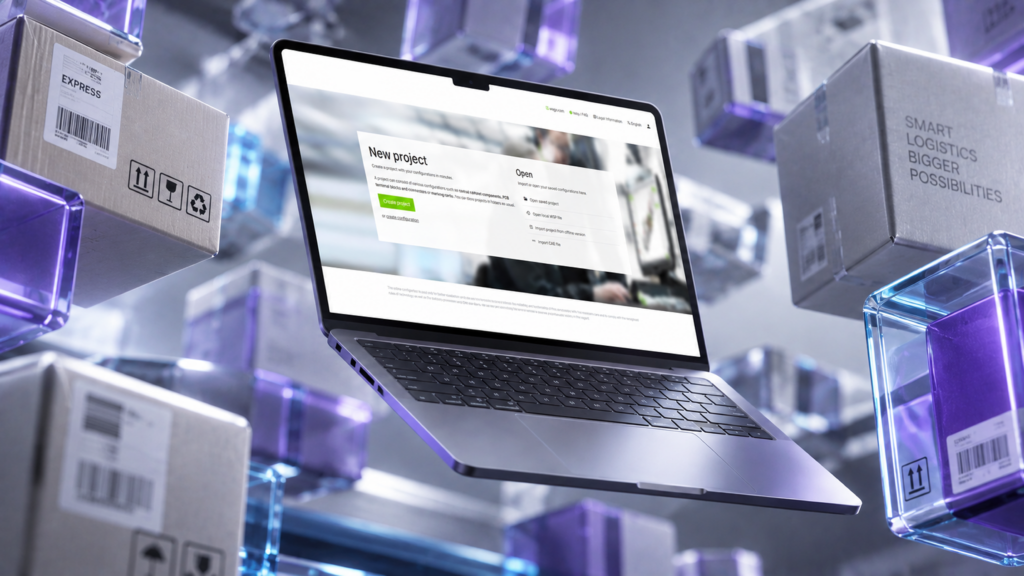
CAD Application for Electronic Components
How Rensai Labs built a CAD platform for 3D modeling of distribution and control equipment, with rule-based validation and automated documentation.
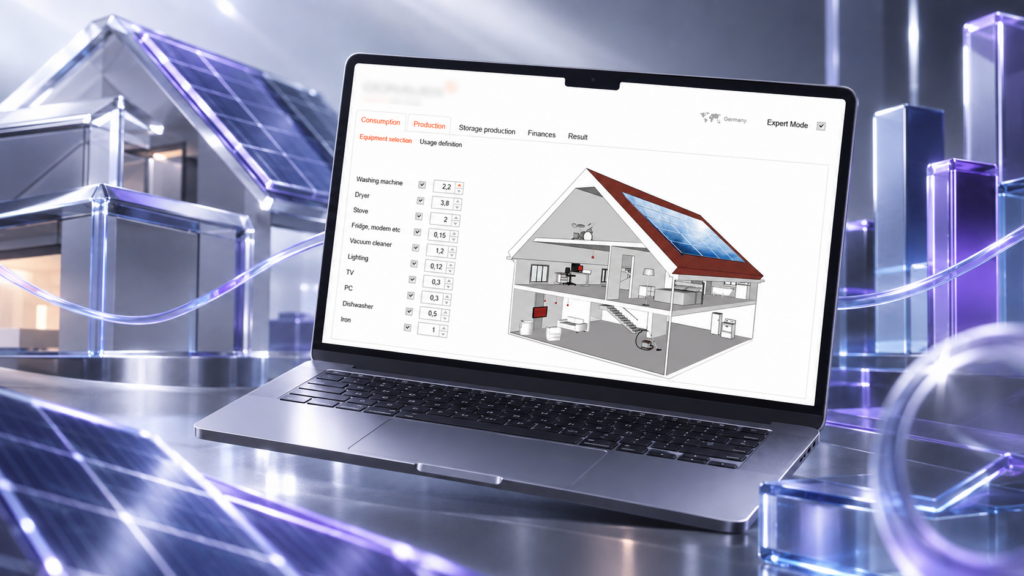
Solar Panel Layout Planning Application
An interactive 3D web application for precision solar panel layout planning, energy forecasting, and automated proposal generation.
Results You Can Achieve
- Optimization of energy consumption and reduction of costs
- Reduction of downtime
- Automation of utility operations and improvement of grid reliability
- Monitoring of energy usage and improvement of energy efficiency
- Modernization of legacy utility software and digitization of energy operations
- Improvement of sustainability reporting

How We Build Energy Software

Before software gets built, the business case and grid economics get tested. We assess ROI, analyze compliance requirements, evaluate energy data pipelines, and audit legacy systems before architecture locks in.
Step 1

Design the platform your infrastructure will depend on: high-availability software architecture, field-ready mobile UX for engineers, SCADA and GIS system integrations, AI model training frameworks, and user journey mapping.
Step 2
Build a delivery roadmap that protects grid modernization schedules and business continuity by phasing deployment, sequencing API integrations, setting data governance benchmarks, and locking in strict regulatory and security compliance gates.
Step 3

Approved designs become a production-ready energy solution. We run agile sprints, build high-frequency data ingestion tools, integrate predictive analytics models, and connect legacy utility systems through secure APIs and Edge architecture.
Step 4

Validate every software layer before live grid deployment with high-load performance testing, hardware-in-the-loop (HIL) simulations, AWS security audits, penetration testing, and IoT sensor verification.
Step 5

Move your platform into production under full control through phased rollout, field crew and operator onboarding, and zero-downtime data migration without disrupting active grid operations.
Step 6

We keep your energy infrastructure stable, secure, and evolving: 24/7 uptime monitoring, critical incident resolution, AI model tuning with live telemetry, and regulatory compliance updates. Real-world performance data drives continuous system enhancements.
* Every project includes 90 days of post-launch support. After that, you can choose the support plan that best fits your operational needs, from core monitoring to fully managed infrastructure support.
Step 7

Act Now to Maximize Your Clean Energy Incentives
According to the H.R. 1 energy provisions, clean energy projects beginning construction after July 2026 must be placed in service by December 2027 to qualify for the full 30% Investment Tax Credit (ITC).
To meet these tight federal timelines, rapid software deployment is critical. Whether you are launching a Battery Energy Storage System (BESS), expanding EV charging infrastructure, or integrating new solar energy software, our team accelerates the development process.




Why Choose Us
Deep Domain Knowledge
Rensai Labs has successfully delivered over 19 projects in the energy industry. We focus on enterprise energy management software development, seamlessly combining deep industry expertise with modern technical capabilities.
BLOG

Popular Trends in Energy & Utilities Industry
Which software trends in the energy and utilities industry are already taking hold and will continue to define the market over the next five years? If you work in the energy sector, you likely know the broader trends well. This article looks at the landscape specifically from a software perspective: what IT capabilities you can […]

Renewable Energy Software: AI, Digital Twins, Cloud, and Green Engineering
Net-zero goals have moved far beyond romantic environmental ideas. Today, software developers face an engineering challenge at epic scale. For decades, decarbonization was treated as the job of energy companies building solar farms and wind farms. But the economics have changed: according to the International Renewable Energy Agency, solar PV module prices have fallen by […]

AI Development
Digital Customer Experience Trends for 2027–2030: AI, Personalization, and the Future of CX
How to win the modern customer battleground? In this article, Rensai Labs explores the key digital customer experience (DCX) trends. We break down what they are, what technologies are required, how they drive business metrics, and what you need to consider to not just follow the current, but truly transform your customer experience.
FAQ
Custom energy software projects typically start at $40,000 for a MVP or targeted integration solution. The final cost depends on several key factors, including system complexity, overall scope, integration requirements (such as connecting with SCADA, smart meters, or ERPs), security compliance standards, and deployment scale.
Project schedules vary based on system scope, but we focus on delivering value fast. We can release an MVP in 3-4 months, allowing you to start testing and processing data early. Full-scale enterprise platforms with deep hardware integrations and complex analytical modules generally take around 12 months.
Absolutely. Seamless integration within complex energy ecosystems is one of Rensai Labs core capabilities. Our team connects modern software with both corporate and industrial infrastructure. We ensure secure data synchronization across CRMs, ERPs, financial and billing modules, asset management software, and real-time operational systems (like SCADA or EMS) without interrupting your workflows.
The Rensai Labs team treats energy systems as critical infrastructure. Our development process follows strict security standards, implementing data encryption at rest and in transit, multi-factor authentication (MFA), role-based access control (RBAC), and compliance with guidelines like NERC CIP and NIST.
Yes. If you already have an internal development department but need to scale your capacity, Rensai Labs delivers a specialized, fully staffed engineering unit that works exclusively on your projects. Our engineers hit the ground running, quickly syncing with your workflows, building up domain-specific expertise, and speaking the exact same technical language as your team.
Off-the-shelf products often struggle to integrate with proprietary smart meters, legacy SCADA systems, or strict, localized regulatory frameworks. In contrast, custom energy software is engineered to align perfectly with your existing tech stack, scale dynamically alongside your data volume, and eliminate the burden of expensive, per-user monthly licensing fees.

readyto Getstarted?
Fill the form to request a quote: