






Solar Panel Layout Planning Application
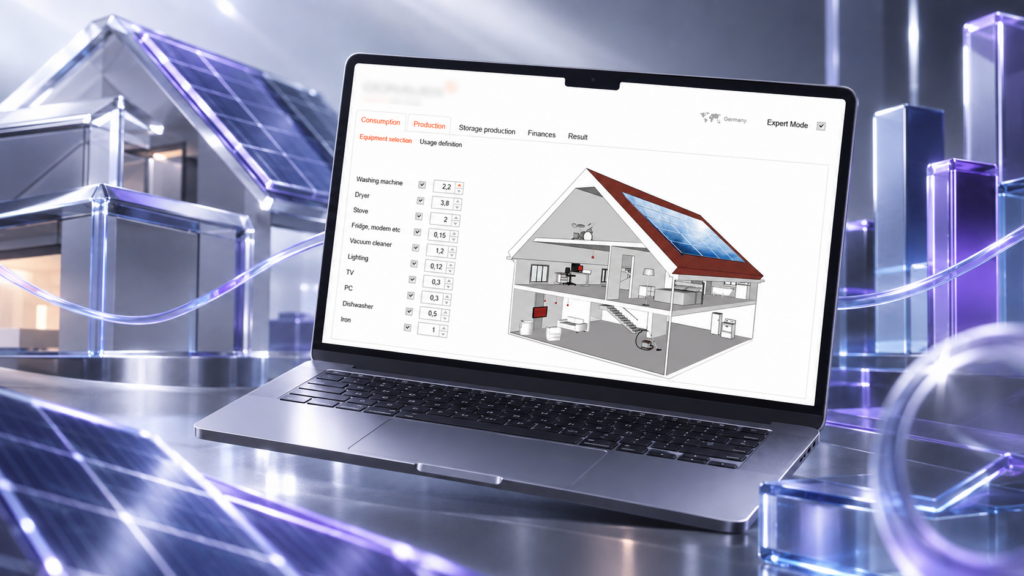
An interactive 3D web application for precision solar panel layout planning, energy forecasting, and automated proposal generation.

Your backend determines how fast your business can scale and how reliably it runs under pressure.
Powered by 50+ experienced backend developers, Rensai Labs builds high-load systems engineered for seamless expansion, robust security against modern threats, and maximum efficiency across all cloud environments.
Our construction system turns fragmented project data into actionable insights, improves forecasting, helps teams stay compliant, and, most importantly, reduces project costs. If your workflows don’t fit off-the-shelf software, Rensai Labs will build a solution around the way your business actually operates.

High-volume transactions, real-time fleet tracking, and complex routing require a zero-downtime, event-driven infrastructure.
The most common mistake teams make before writing a single line of backend code is choosing the wrong delivery model.
Why? Because it takes a direct hit on the big three: your budget, your timeline, and your architecture.
All system components are unified into a single software application and executed as a single process.
The application is built as a single executable while internally structured into strictly isolated, independent modules.
The application is a set of two or more components (services) that are independently deployable and loosely coupled.
The system is built around asynchronous event handling, where decoupled components communicate by publishing and consuming real-time events through message brokers.
The application runs core backend logic on fully managed cloud platforms, executing code in response to events without infrastructure management.
The system coordinates multiple interconnected backend nodes over a network to handle high-throughput workloads and ensure fault tolerance.
The system is natively engineered for cloud environments, leveraging microservices, containerization, managed infrastructure, and automated orchestration.
Answer 5 quick questions about your business goals, team, and current bottlenecks to discover the optimal architectural pattern for your system.
1 / 5
Your Recommended Architecture Pattern
Purpose-built for modern cloud environments leveraging Kubernetes, containerization, and GitOps automation. Delivers automatic self-healing, rapid elasticity during traffic surges, and seamless continuous delivery.
The sweet spot for growing products. Maintains clean boundaries between modules while preserving simple deployment and lower operational costs.
Ideal for large organizations and autonomous teams. Enables independent scaling, rapid continuous delivery, and isolated feature deployments.
Designed for high-throughput, real-time data streaming, and heavy background processing without blocking user actions.
Perfect for fluctuating workloads and utility-based pricing. Pay only when your code runs and eliminate infrastructure management completely.
Designed for mission-critical enterprise platforms requiring ultra-high load handling, Big Data processing, and multi-node resilience. Solves single-server hardware limits with seamless fault tolerance and zero single points of failure.
Best for fast time-to-market, simple deployments, and lean teams. Minimizes operational overhead while validating your business model.
Maintaining legacy backends can consume up to 80% of your IT budget. And that’s not even the biggest risk. Outdated systems inevitably lead to security gaps, compliance risks, lost critical knowledge, and a high risk of system failure with prolonged downtime.
It is a critical imperative to stay competitive and keep pace with market leaders. However, modern digital experiences and advanced features require a modern backend architecture capable of supporting continuous innovation, high loads, and seamless scalability.


An interactive 3D web application for precision solar panel layout planning, energy forecasting, and automated proposal generation.
How Rensai Labs built a CAD platform for 3D modeling of distribution and control equipment, with rule-based validation and automated documentation.

ROI evaluation, system throughput requirement analysis, architecture auditing, and security and compliance criteria definition prior to locking in the tech stack.

Architectural pattern selection, layout of cloud-native components, establishment of event-driven data flows, integration standard definition, and failover strategy setup.
Data storage layer architecture, defining data access patterns, setting up indexing and caching, and ensuring data integrity and GDPR/SOC2 compliance.

Definition of clean, secure API contracts following API-first specifications, request and response schema configuration, versioning strategies, and authentication standards.

Iterative, agile backend development: writing clean, testable code, implementing high-frequency data pipelines, building core business logic, and integrating third-party services.

Pre-release validation across all software layers: automated unit and integration tests, high-load stress testing, static code analysis (SAST), AWS/Azure security audits, and penetration testing.

Automated deployment pipeline and Infrastructure-as-Code (IaC) engineering to enable automated testing, containerization, CI/CD, and zero-downtime releases.
Safe production rollouts using zero-downtime database migrations and cluster orchestration (Kubernetes) for multi-region availability and auto-scaling.
24/7 uptime monitoring, SLA-backed incident resolution, performance optimization, and regular security patching.
* Every project includes 90 days of post-launch support. After that, you can choose the support plan that best fits your operational needs, from core monitoring to fully managed infrastructure support.

Full-time backend engineers who work as an extension of your internal team.

Flexible backend engineering billed on actual development hours spent.

Predictable backend delivery with pre-defined scope, budget, and milestone timelines.

Targeted backend engineering talent to scale your internal team on demand.
Which software trends in the energy and utilities industry are already taking hold and will continue to define the market over the next five years? If you work in the energy sector, you likely know the broader trends well. This article looks at the landscape specifically from a software perspective: what IT capabilities you can […]
Net-zero goals have moved far beyond romantic environmental ideas. Today, software developers face an engineering challenge at epic scale. For decades, decarbonization was treated as the job of energy companies building solar farms and wind farms. But the economics have changed: according to the International Renewable Energy Agency, solar PV module prices have fallen by […]
How to win the modern customer battleground? In this article, Rensai Labs explores the key digital customer experience (DCX) trends. We break down what they are, what technologies are required, how they drive business metrics, and what you need to consider to not just follow the current, but truly transform your customer experience.
At Rensai Labs, we primarily follow Agile methodologies to ensure flexibility, transparency, and rapid iteration throughout the development process.
Yes. We offer dedicated Project Managers and Tech Leads depending on your team setup and preferred delivery model.
Dedicated Team
We provide complete management and technical steering, taking full responsibility for architecture, code quality, and delivery milestones.
Staff Augmentation
We can embed experienced Tech Leads or Scrum Masters to help structure your internal workflows, audit architecture, and accelerate your engineering team.
Yes, absolutely. We strictly respect client confidentiality and are ready to sign an NDA before reviewing any project details, requirements, or architecture documentation.
Yes, we partner with companies of all sizes, tailoring our backend solutions and engagement models to match their specific needs and technical maturity.
Fill the form to request a quote: